
Mike Brooks

Audio By Carbonatix
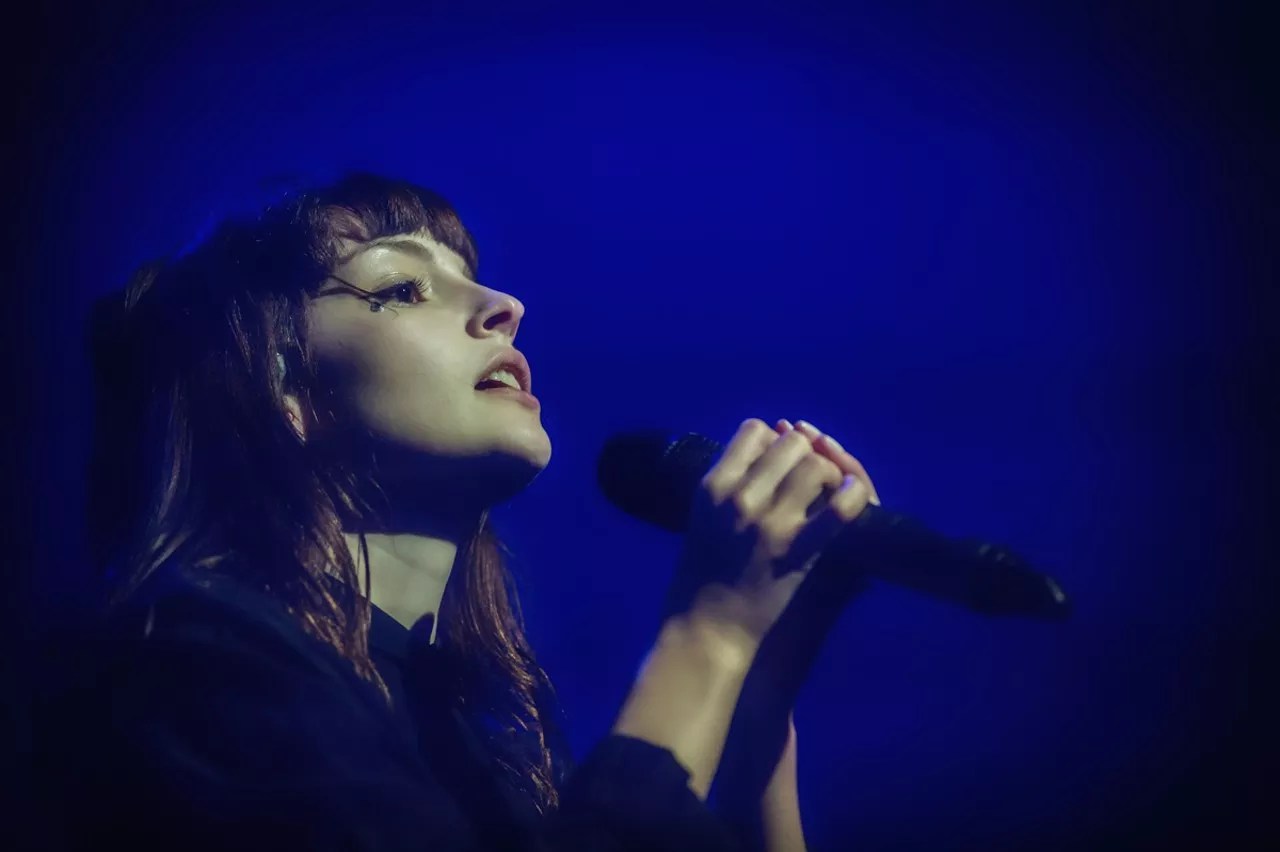
Chvrches excels at finding light in darkness. The group’s fourth and latest studio album, Screen Violence, the impetus for the tour which brought the Scottish synth-pop trio to the South Side Ballroom Sunday night, is a prime example.
Lauren Mayberry, Iain Cook and Martin Doherty effectively worked across two continents on a record conceived amid the calamity of the pandemic, stitching the songs together remotely. The album is shot through with grim sentiment (“Had a dream your father died/I couldn’t scream, I couldn’t cry,” goes a line in “Violent Delights”).
In concert, the gripping songs provide enormous catharsis, thunderous beats underpinning ethereal melodies, all unfurled before a near-capacity audience with its arms collectively stretched heaven-ward and seeming to move as one.
The show also marked a bit of a reunion: Sunday’s performance was the first non-festival appearance Chvrches has made in North Texas in six years, following a 2019 stop at Fort Worth’s inaugural Fortress Festival and a 2016 slot at Edgefest in Frisco.
When news happens, Dallas Observer is there —
Your support strengthens our coverage.
We’re aiming to raise $30,000 by December 31, so we can continue covering what matters most to you. If the Dallas Observer matters to you, please take action and contribute today, so when news happens, our reporters can be there.
For a little over 85 minutes Sunday, Chvrches (augmented by touring drummer Jonny Scott) raced through much of Violence, its sinister, sleek tracks meshing nicely with selections from the band’s prior three albums.
The breathless pace meant spilling from the stuttering, propulsive opener “He Said She Said” (with its harrowing refrain of “Feel like I’m losin’ my mind”) to the stomping “Leave a Trace” to the explosive “Bury It” to the visceral “Final Girl,” Mayberry’s lithe, steely soprano anchored by the three men on guitar, bass, synthesizers and drums behind her.
The music filled the room with concussive bass. It was further enhanced by the staccato lighting, and the video screen stretching the width of the stage, alternately displaying static, macabre images or vivid, impressionistic washes of color. The cumulative impact was yet another counterpoint to the often bleak lyrics, leavening what could’ve been an otherwise oppressive mood.
Mayberry, who spun joyously across the breadth of the stage throughout the night, also kept things breezy between songs: “I know it’s a Sunday night, and you could be watching telly, so thanks for coming down,” she said cheerily, by way of introduction. The hearty roar greeting her underlined the passion of those in attendance; more than once, the crowd sang back the band’s lyrics with a visceral intensity.
The night reached its apex – and its most stark contrast between dark and light – during the encore, when Mayberry re-emerged from the wings drenched in blood, her arms and neck slathered with gore.
Arms raised, her white T-shirt stained crimson, she launched into “Asking for a Friend,” the opening track on Screen Violence, its lyrics pitched between regret and hope: “The past is in the past/It isn’t meant to last/But if I can’t let go/Will you carry me home?”
In the moment, Mayberry’s blood-splattered visage was an unsettling visual, but nonetheless one charged with radiant euphoria. The audience, gathered in the gloom, sang and danced and reached for the light.
